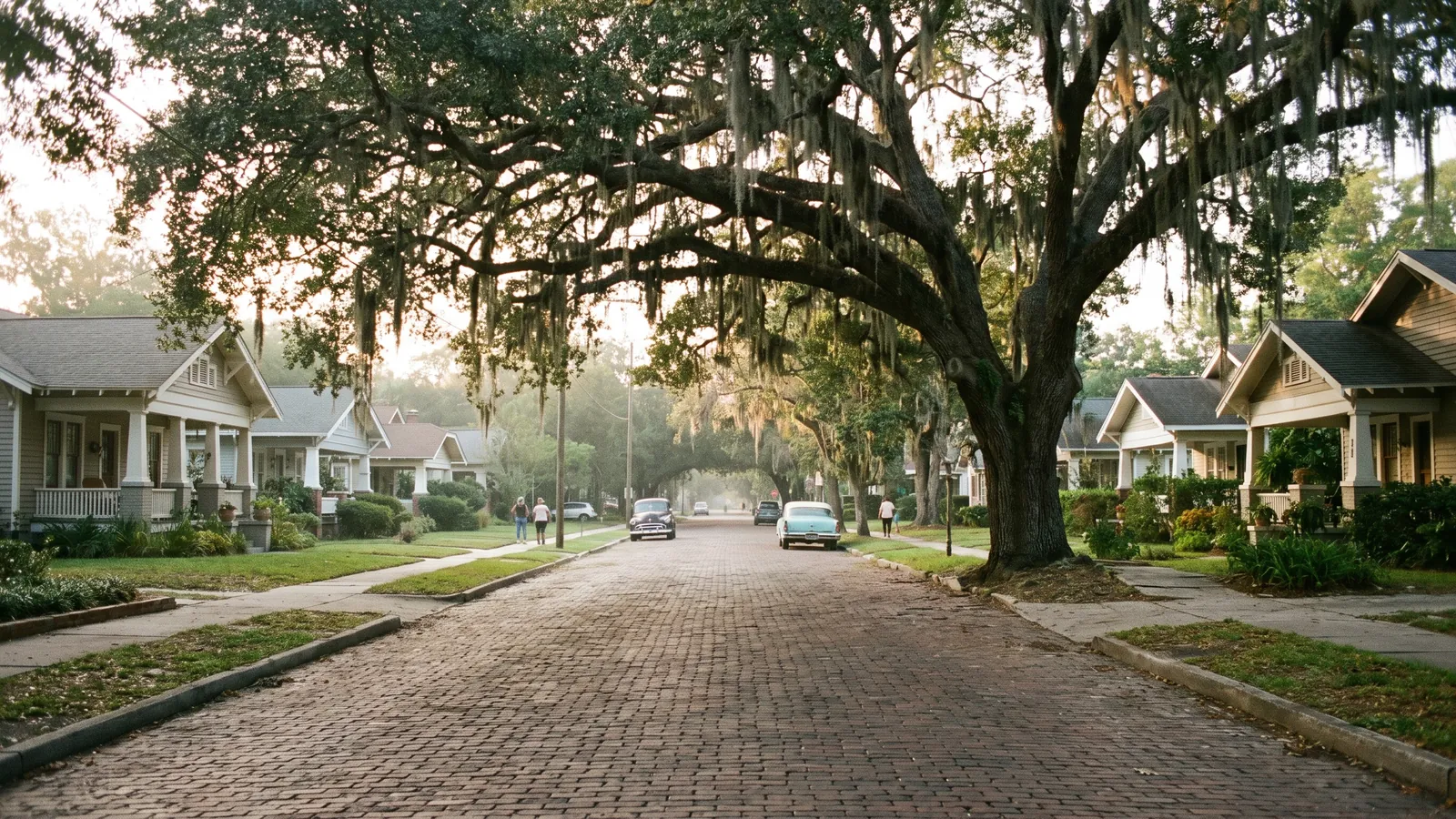
Lakeland's historic neighborhoods — Dixieland (platted 1907), Beacon Hill (1923, with the live oak as its district symbol), Lake Hunter Terrace, the South and East Lake Morton districts, Biltmore-Cumberland — were planted in the 1910s–30s with oaks, and the planters chose three species that look similar when young: live oak, laurel oak and water oak. A century later they could not be more different. Live oaks (Quercus virginiana) live for centuries, have the highest wind resistance of any Florida tree, and survived Hurricane Ivan at a 91 percent rate. Laurel oaks live 50 to 70 years, begin to hollow around fifty, carry decay columns ten to twenty feet long inside trunks that look sound, and break — Ivan took 23 percent of them. Water oaks are worse: 30 to 50 years, breaking apart at maturity, and the lowest wind resistance of any oak.
So oak care in Lakeland is two jobs. For the live oaks, it's keeping a 100-year-old tree healthy for another hundred: deadwooding, crown cleaning, weight reduction on the long horizontal limbs over the house, no topping ever, and protecting the root zone from construction. For the laurel and water oaks, it's an honest assessment — leaf shape, bark, the sound of the trunk, a resistograph reading if it's close — and a straight answer about whether this one has ten more years with pruning or whether it should come down this spring before the next hurricane decides for you. We've taken down a lot of laurel oaks over Dixieland bungalows, and we've told a lot of owners that the oak the last guy wanted to remove is a live oak with another century in it.
What's included
Species identification
Live, laurel or water — from the leaf, the bark and the form. It changes everything about the advice.
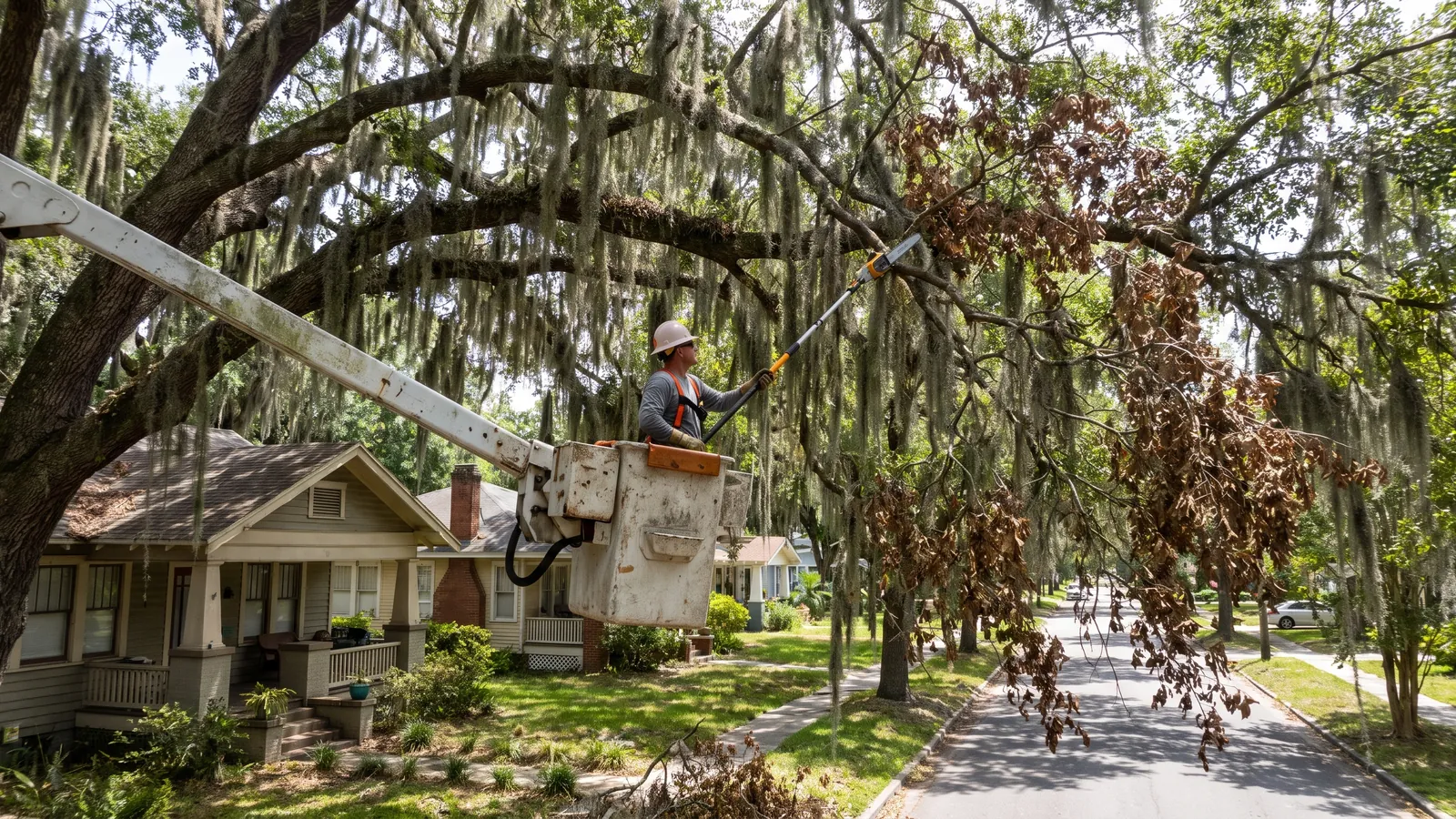
Live oak preservation pruning
Deadwood, crown cleaning, weight reduction over structures, all to ANSI A300; never topping.
Laurel & water oak assessment
Trunk sounding, cavity probing, resistograph where needed, and a written opinion on remaining life.
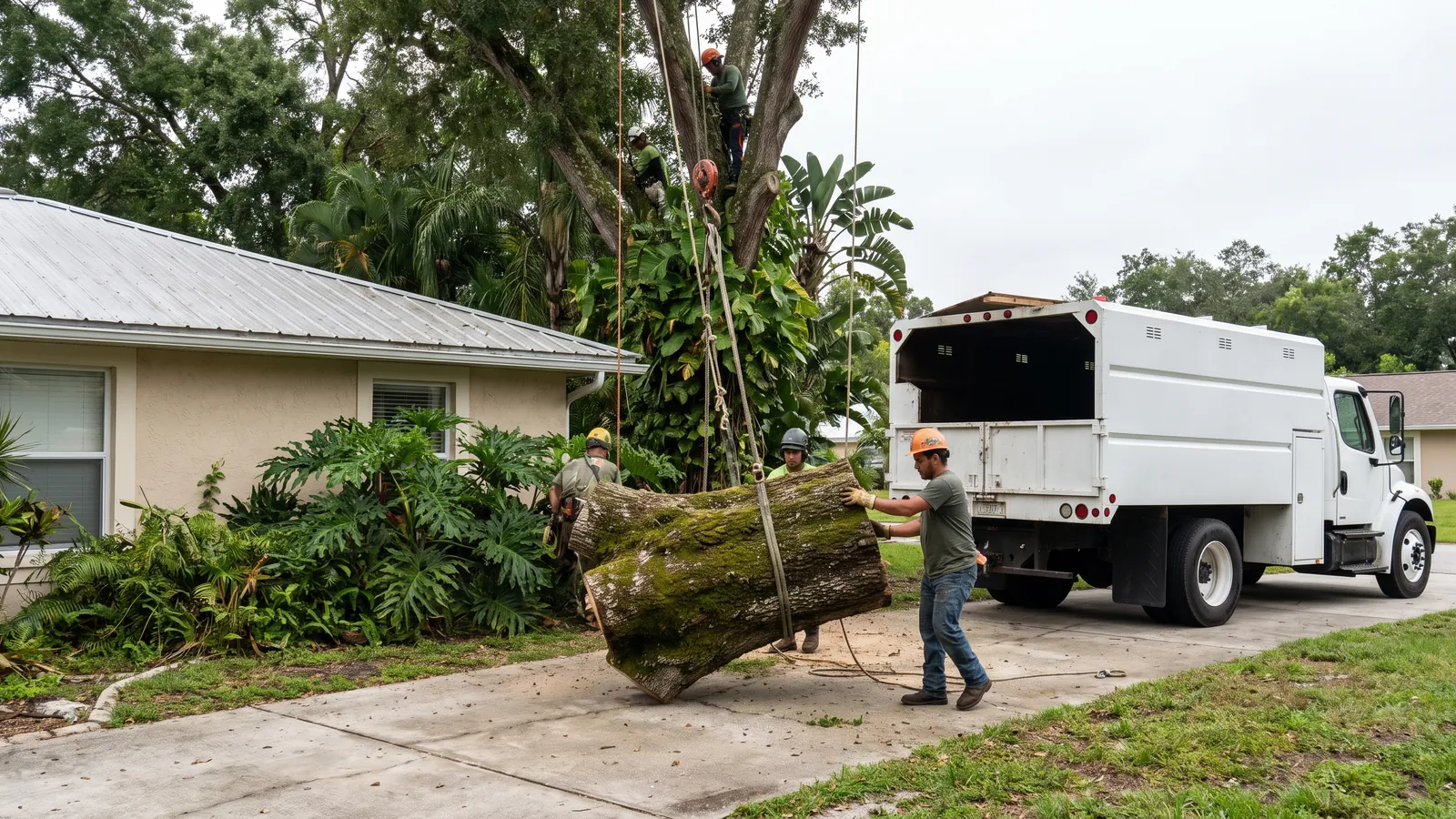
Removal when earned
Hollow, leaning or failing laurel oaks rigged down in pieces over the bungalows; F.S. 163.045 letter when it applies.
Root-zone protection
Advice and specs for construction, driveways and utility work near the critical root zone.
Spanish moss & ball moss
Removed where it's loading limbs; left where it's harmless (it usually is).
Oak trimming and removal cost in Lakeland, FL
| Job | Typical price | Notes |
|---|---|---|
| Live oak crown cleaning and deadwooding | $500 – $2,000 | Historic-size trees |
| Weight reduction over the house, per limb | $150 – $500 | Cut back to a lateral |
| Laurel or water oak assessment | Free with estimate | Resistograph reading $150 if needed |
| Laurel oak removal, 40–60 ft, over a house | $1,500 – $3,500 | Rigged in pieces |
| Large live oak removal (rare) | $2,500 – $5,000+ | Only when it has truly failed |
These are 2026 Polk County ranges so you can budget. Your written price is itemized — the climb or bucket work, rigging, chipping and haul-off, stump grinding, crane time, permit check — and good for 30 days.
Recent work
Questions we get about oak care
How do I tell a live oak from a laurel oak?
Live oak leaves are thick, leathery, dark and oval with edges that curl under, and the tree keeps them all winter. Laurel oak leaves are thinner, longer and more pointed, and the tree drops them in spring. Live oak bark is deeply furrowed and blocky; laurel oak bark is smoother and grayer. The form: live oaks spread wide and low, laurel oaks go up. Send us a photo and we'll tell you.
Is Spanish moss killing my oak?
No. Spanish moss is an epiphyte — it takes nothing from the tree. A heavy load on an already-weak limb can add weight, and a tree that's suddenly covered in it is sometimes a tree that's thinning for another reason, but the moss itself is harmless and we only remove it where it matters.
My laurel oak looks healthy. Does it still have to go?
Not necessarily. 'Laurel oak' isn't a verdict; it's a reason to look closely. A 50-year-old laurel oak with a sound trunk, no cavities and nothing heavy under it can stay for years with regular deadwooding. One with a hollow sound, conks at the base and a bedroom under it should go. We'll show you which.
Can you save a live oak that's been topped?
Often. Restoration pruning over several years selects the best of the water sprouts and trains them into a new crown. It's slow, but a topped live oak is worth the effort in a way a topped laurel oak isn't.
Will the city let me remove a historic-district oak?
Lakeland's tree-preservation code applies to development activity; on a single-family lot under an acre a private tree can be removed without a permit, historic district or not. Trees in the right-of-way are the city's.